
The Customer Journey
Building a More Effective Digital Marketing Strategy
In the world of digital marketing and e-commerce, one key challenge businesses face is how to make customers choose their products over those of competitors. Mike (a regular small business owner) recently encountered this issue. As the owner of an Electronics Store, he wanted to attract more customers to buy his new wireless earbuds. After some efforts, Mike discovered that true marketing success isn’t about having loud ads, but about deeply understanding customer needs and optimizing every touchpoint along the way.

Shifting Focus to the Customer: Mike's Marketing Transformation
At first, Mike’s thought process was, “How can I sell more earbuds?” But after several rounds of marketing campaigns that didn’t perform well, he realized the important question wasn’t how to sell more, but how to solve customer pain points. So, he started to think from the customer’s perspective, asking himself, “What problems do customers face when buying earbuds?”
For example, some customers want to listen to music on their commute but hate tangled wires, while others find that their earbuds always fall out during workouts. After identifying these pain points, Mike designed the earbuds to be lighter and slip-resistant, highlighting these features in his advertising. This shift in focus from business goals to customer needs made his marketing more targeted, and customers found it easier to relate to the product.
What is a Customer Journey?
Once, Mike’s friend John recommended a fitness tracker, saying, “It doesn’t just count steps; it can also identify what kind of exercise you’re doing.” Mike was intrigued but wanted to learn more details, so he went online to read reviews and explore user experiences. He even reached out to customer support to ask about after-sales service.
From John’s recommendation to searching online and contacting customer support, Mike’s entire shopping process was a typical customer journey. If a business can better understand what customers feel and need at each step, it can use precise marketing and service to improve customer satisfaction and conversion rates.
Touchpoints: Every Interaction Matters
Throughout the customer journey, each interaction Mike had is known as a touchpoint. These include his friend’s recommendation, online reviews, responses from customer support, and more. Every touchpoint is an opportunity for a business to present itself and earn customer trust. If Mike had encountered unhelpful support, he might have abandoned the purchase altogether.
To ensure customers have a positive experience at every touchpoint, businesses can create a customer journey map, which highlights key steps from the first interaction to the final purchase. This helps businesses identify where customers might drop off and guides how to improve each step of the process.
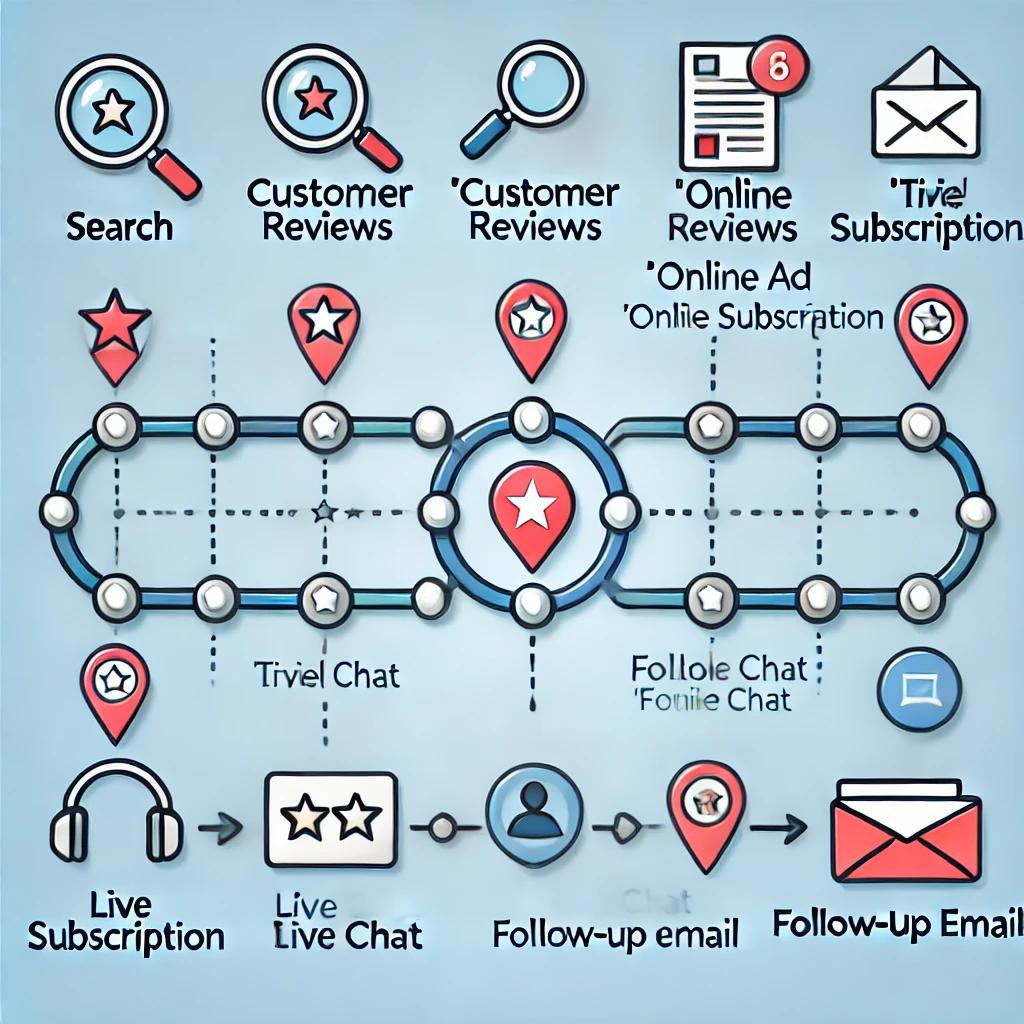

Mike decided to revamp the customer journey. He made adjustments to everything from advertising and website design to after-sales service. First, he highlighted the benefits of his earbuds in ads and offered a limited-time free trial, giving customers more opportunities to experience the product. Next, he added a detailed FAQ section on the website, making it easy for customers to find the information they needed. Finally, he trained his support team to quickly answer customer inquiries and provide purchase recommendations.
As a result, the entire shopping experience became smooth and hassle-free. Many people who tried the earbuds felt they truly solved their problems and decided to buy them. Mike’s wireless earbuds sales significantly increased, and he learned that successful marketing is not just about pushing customers to buy, but about helping them find solutions that fit their needs.
Customer journeys are not complicated. If businesses genuinely understand each customer’s needs and work to optimize every touchpoint, they can deliver better customer experiences. Mike’s story teaches us that customers don’t buy because of flashy slogans; they buy because their needs are met.
Going forward, businesses can use customer journey maps and data analysis to keep refining their marketing strategies. This not only helps them target customers more precisely but also allows them to stand out in a competitive market. Hopefully, every business owner can be like Mike, creating value for customers through care and understanding, and achieving true marketing success.