
Importance of Branding in Digital Marketing: How to Make Your Brand Stand Out
Discover How Little Mike’s Adventure Shows Why a Strong Brand is Key to Success Online
Let's exploring a crucial topic for any business: the importance of branding in digital marketing. A brand is more than just a name or logo—it’s the impression customers have of a business, built over time. In this post, we’ll use a fun story about a young explorer named Little Mike to understand why building a strong brand matters for digital success.

What is a Brand, and Why is It Important?
A brand is much more than just visuals or slogans. Think of it as the “personality” of a business. Imagine if brands were people—they would have unique traits and values. Little Mike, our adventurous character, wants his brand to represent “courage” and “friendship.” So, he designs a logo with a hand holding a telescope, symbolizing his love for discovery and making new friends.
Several elements make up a brand: culture, values, and tone of voice (how it “speaks” to its audience). Together, these create the brand’s identity and influence how customers feel about it.
The Connection Between Branding and Digital Marketing
Branding and digital marketing go hand in hand. Strong branding is the foundation for an effective digital marketing strategy. When businesses clearly define their brand identity and values, they’re better equipped to stand out in a crowded market and attract loyal customers. Many companies start with branding before launching any major marketing campaign to ensure a clear, unified message across channels.
For example, Little Mike wants to promote his “brave explorer” brand on digital platforms. To build trust and recognition, he keeps his brand messaging consistent across social media, his website, and online ads. Whether posting on Instagram, sharing stories on Facebook, or running ads on YouTube, Mike’s brand always communicates courage and adventure.
Building Brand Equity: Why Do Customers Choose Trusted Brands?
Brand equity is the added value customers perceive in a brand they trust. Simply put, it’s the reason customers are often willing to pay more for a well-known brand. Brand equity grows when customers have positive experiences and feel connected to a brand.
Take, for example, Little Mike’s two adventure-themed water bottles. One bears his established “brave explorer” brand, and the other is unbranded. Even though both bottles are identical in quality, customers are more likely to choose Mike’s brand because it resonates with their love of adventure. This trust adds to the brand’s value and differentiates it from competitors.

How Digital Marketing Strengthens Brand Equity
Digital marketing plays a key role in building and strengthening brand equity. Through consistent online advertising, engaging social media content, and personalized email campaigns, brands can increase awareness and build trust. By keeping his brand active online, Little Mike can continuously remind customers of his brand values and strengthen their loyalty.
To do this, Mike decides to share weekly adventure stories on Instagram and his blog, encouraging followers to share their own experiences. This regular engagement not only builds brand awareness but also fosters a community around his brand. Over time, customers feel a personal connection and are more likely to choose Mike’s brand, even recommending it to friends.
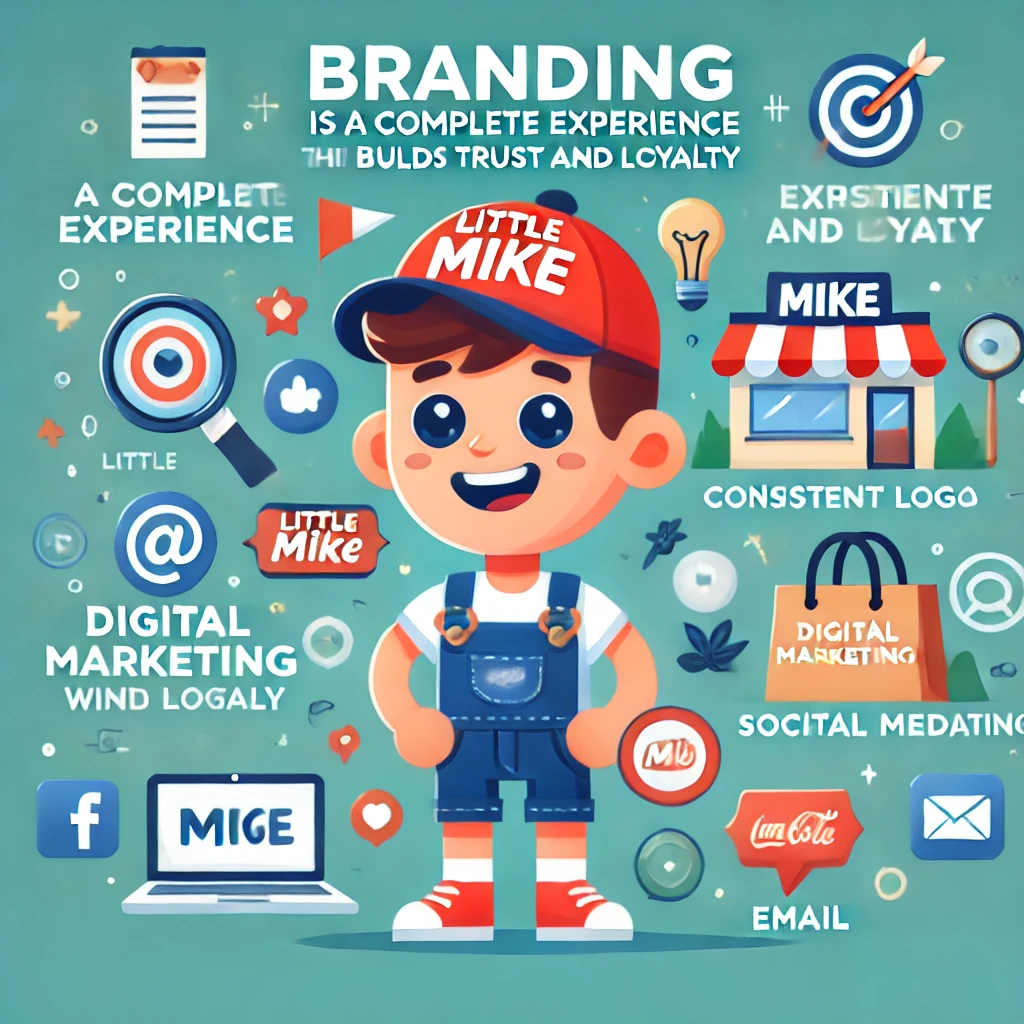
It’s the complete experience that builds trust and loyalty. As we saw with Little Mike, a strong brand identity creates a lasting impression, making it easier for businesses to stand out and connect with their audience.
Digital marketing helps brands build trust and loyalty with customers, making them more likely to stay engaged. Here’s how Little Mike uses digital marketing to make his adventure brand more popular.
1. Storytelling: Making the Brand Relatable
Every week, Little Mike shares his adventure stories on social media, like camping in the forest or hiking up mountains. He encourages his followers to share their own small adventures in the comments. This interaction makes his brand feel like a friendly companion, and people start to see it as part of their own adventure experience.
2. Interactive Campaigns: Increasing Brand Awareness
To reach more people, Little Mike runs “Mini Adventure Challenges” on Instagram. He invites followers to post photos of themselves outdoors using his brand’s hashtag. Each month, he randomly selects a lucky follower to win a small gift. Through these interactive activities, Little Mike’s brand gains visibility and attracts new fans.
3. Personalized Emails: Strengthening Customer Relationships
Little Mike sends regular emails to customers with adventure tips, gear recommendations, and even a discount code. He also shares seasonal adventure ideas that match the current time of year. When customers receive these thoughtful updates, they feel that the brand truly cares about them, building a stronger emotional connection.
4. Data Analysis: Understanding Customer Preferences
Little Mike tracks which posts get the most engagement and which products are most popular. For example, he notices that posts about “hiking tips” get lots of likes and comments, so he decides to create more content like this. By analyzing data, he can better understand what his customers enjoy, making his brand more relevant to them.
By combining consistent branding with digital marketing, businesses can establish long-lasting customer relationships and drive sustainable growth online.