
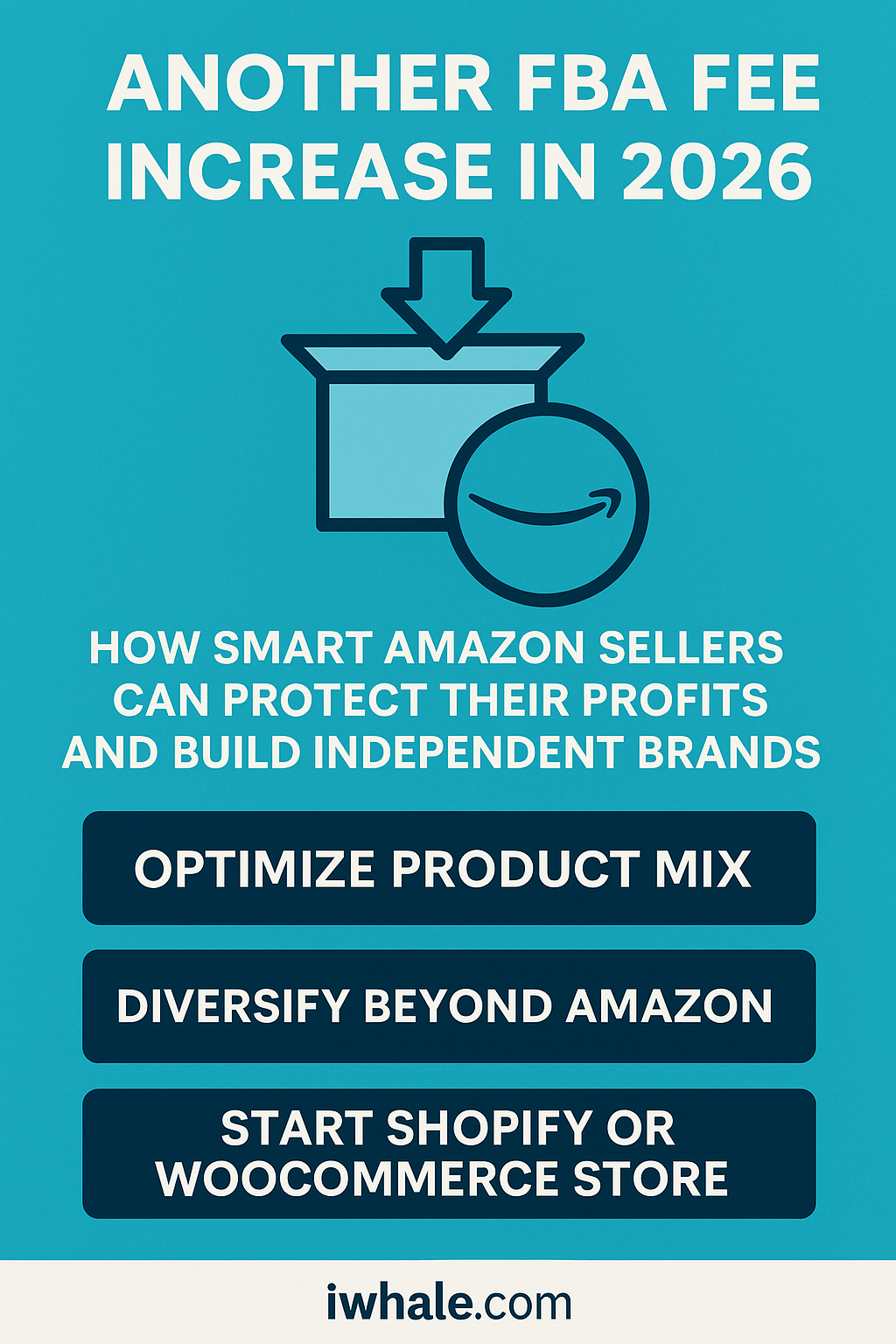


Amazon has just announced another FBA fee increase in 2026, raising fulfillment fees by $0.08 per unit — about 0.5% of the average product price.
For many small and mid-sized sellers, this is not just another price adjustment; it’s a wake-up call. The eCommerce landscape is changing fast, and the days of relying solely on Amazon for growth are fading.
This article will break down what the new changes mean, why they matter, and how sellers can build stronger, independent brands — including how to leverage professional WordPress website building solutions to future-proof your business.
📦 The 2026 Amazon Update: A Chain Reaction of Rising Costs
Amazon’s latest Seller Newsletter confirms that FBA fulfillment fees will rise by $0.08 per unit in 2026. On the surface, this looks like a small adjustment. But when combined with storage fees, referral fees, and advertising costs, it forms a chain reaction of profitability pressure.
In addition to the FBA fee hike, Amazon also announced:
- Expansion of Multi-Channel Fulfillment (MCF) to Shopify, SHEIN, and Walmart.
- Bulk order referral fee discounts for Amazon Business sellers.
- New partial refund policy, allowing customers to get partial refunds without returning products.
These changes highlight a clear direction: Amazon is shifting more operational costs to sellers while expanding its ecosystem control.
💣 Why This Fee Hike Hurts More Than You Think
1️⃣ Stacked Cost Increases
Each incremental fee adds up — storage, returns, shipping, and advertising. For many sellers, their cost per sale has risen by over 20% in the past two years.
2️⃣ Shrinking Margins for Low-Priced Products
Products priced below $20 are hit hardest, leaving little room for profit after Amazon’s cut.
3️⃣ Bigger Players Have the Advantage
Large brands can offset these rising costs through scale, automation, and brand loyalty — something smaller sellers often lack unless they evolve.
💡 How Smart Sellers Can Fight Back
1️⃣ Rethink Your Product Strategy
Stop chasing the lowest price. Instead, focus on higher-value products, product bundles, or upgraded versions.
Bundle complementary items or add unique features that justify a premium price. The goal is to increase Average Order Value (AOV) and boost perceived value.
2️⃣ Diversify Beyond Amazon
The most resilient sellers are those who control multiple sales channels. Building your own online store — whether on Shopify or WordPress (WooCommerce) — allows you to collect customer data, run remarketing campaigns, and create a brand identity.
If you’re ready to take that step, professional setup matters. Learn how iWhale’s WordPress Website Building Service can help you build a fast, SEO-optimized, and conversion-focused eCommerce site that integrates seamlessly with your Amazon operations.
3️⃣ Improve Inventory and Fulfillment Efficiency
Adopt a hybrid fulfillment model — part FBA, part FBM — to manage costs and flexibility.
Regularly audit your inventory to identify slow-moving items and reduce long-term storage fees. Smart forecasting can prevent overstocking and cash flow issues.
4️⃣ Maximize Advertising ROI
Advertising is no longer optional — it’s strategic. Use analytics tools like Helium10, DataHawk, or Perpetua to track conversion rates and cut waste.
Optimize your keyword targeting, adjust bids, and focus ad spend on products with the highest profit margins.
5️⃣ Build a Brand, Not Just a Storefront
A strong brand outlives algorithm changes and platform policies.
Create a unique identity, tell your story, and engage customers through content marketing and social media.
Your website should reflect your brand’s values and promise — and that’s exactly where custom WordPress development can elevate your business beyond template-driven stores.
🚀 Why Building an Independent Website Is No Longer Optional
Relying on Amazon alone is like renting a house — you’re always at risk of higher rent, new rules, or eviction.
Owning your own website is like owning property — you control the design, data, and customer experience.
A well-built independent site allows you to:
- Own your traffic and customer data
- Build SEO authority and organic visibility
- Create long-term brand value and recurring sales
If you’re still selling only through Amazon, 2026’s FBA fee increase should be your signal to start investing in digital independence.
With platforms like WordPress + WooCommerce, combined with iWhale’s professional website building service, you can design a website that not only sells — but tells your brand’s story.
🌍 The Future: Brand-Driven, Multi-Channel Growth
The next stage of eCommerce will be defined by brand ownership and multi-channel resilience.
Amazon’s fee hikes are not a threat — they are a filter. Sellers who keep chasing low prices will vanish, while those who invest in brand-building and website infrastructure will thrive.
💡 Final Thought:
Building your own website is not just an alternative — it’s the foundation of long-term profitability, customer trust, and brand control.
With expert partners like iWhale, you can transform your Amazon business into a sustainable, independent brand ready for the post-2026 eCommerce era.