
Build an Effective Marketing Strategy
From Customer Research to Marketing Goals, Learn Step-by-Step
Little Mike owns a small handmade soap shop. He wants to attract more customers through digital marketing, but with so many marketing tools and strategies available, he feels lost. So, he decides to start by understanding his customers and gradually build his marketing strategy. Let's take a look at how Little Mike achieved this step by step.
Step 1: Customer Research - Understand Your Audience
Little Mike realized that without knowing his customers, all his marketing efforts would be like throwing darts blindfolded. Therefore, he decided to collect customer information through surveys and social media interactions. He asked simple questions like, “Why do you like handmade soaps?” “Where do you usually shop for daily essentials?” and “What kind of scents do you prefer?”
From the collected data, Little Mike discovered that his customers were mostly urban women aged 25-40, who loved natural, additive-free products and preferred discovering new items on social media. This insight helped him identify his primary target audience and recognize the potential of marketing his products with the focus on “natural” and “healthy” qualities.
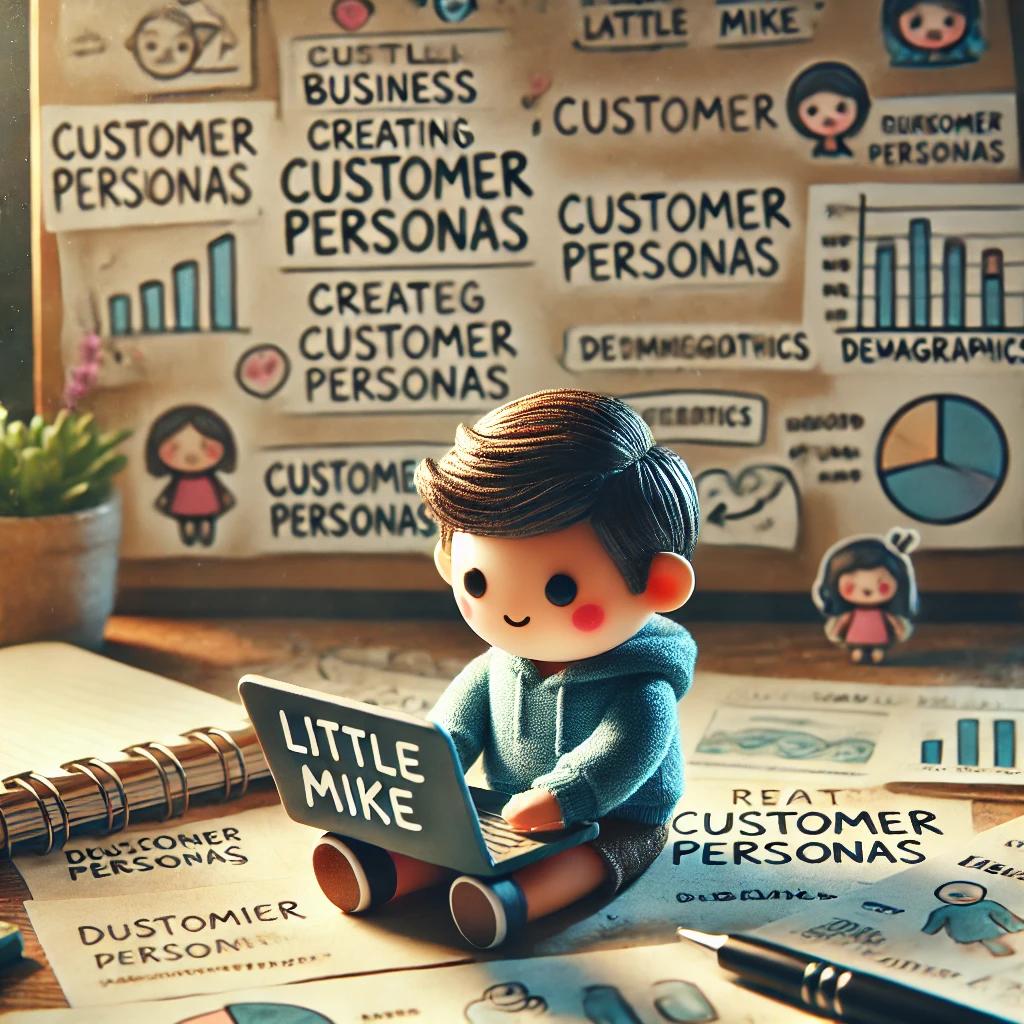
Step 2: Creating Customer Personas - Build Your "Ideal Customer"
To make his marketing more targeted, Little Mike organized the information he gathered and created a detailed customer persona. He named this persona “Sarah.” Sarah is a 30-year-old office worker who values quality living, prefers natural products, and often browses content about healthy lifestyles on social media.
Sarah’s Profile:
- Age: 30
- Occupation: Office worker
- Interests: Healthy living, skincare
- Shopping Channel: Discovers new products on social media
- Purchase Motivation: Loves natural ingredients and additive-free products
By building this persona, Little Mike could better imagine, “How would I market my products to Sarah?” This way, his marketing content became more focused and resonated more with his audience.
Step 3: Setting Marketing Goals -S.M.A.R.T.
With a clear customer persona, Little Mike moved on to setting specific marketing goals. For instance, he wanted to increase traffic to his online store over the next three months, aiming to boost sales. So, he set a clear goal: “Increase website traffic by 30% through social media ads within three months.”
Little Mike’s SMART Goal:
- Specific (S): Increase website traffic.
- Measurable (M): Boost by 30%.
- Achievable (A): Realistic goal based on past data and ad budget.
- Relevant (R): More traffic directly supports increasing sales.
- Time-bound (T): Achieve the goal within three months.
Armed with a clear customer persona and marketing goals, Little Mike began developing his marketing strategy. He decided to use social media ads to capture Sarah’s attention. He created a series of ads showcasing the handmade soap-making process, highlighting the natural ingredients, and using warm, friendly language to convey his brand’s message of “natural, healthy, and handmade.”
Additionally, Little Mike organized a “Share Your Experience, Get a Gift” campaign, encouraging buyers to share their product experience on social media. This not only increased brand exposure but also built trust through real customer feedback.


After three months, Little Mike analyzed the ad performance and website traffic data. He found that the website traffic had increased by 25%. Although it didn’t fully reach his initial target, it was a noticeable improvement compared to before. Little Mike decided to tweak the ad content and adjust the timing to aim for even better results in the next phase.
By reviewing the data, Little Mike realized that some ads had high click-through rates but low conversion rates, indicating that while the ads drew traffic, they didn’t convert visitors into buyers. Therefore, he focused on improving the product page content and added purchase incentives, such as discounts and limited-time offers, to encourage more sales.
Through this story, we see that a successful marketing strategy starts with understanding your customers. Little Mike built a detailed customer persona through customer research and set clear marketing goals and strategies. While the process required constant adjustment and improvement, having a clear direction ensured he achieved results.
If you, like Little Mike, are struggling with your brand’s digital marketing, start by getting to know your customers. This approach will lay a solid foundation for building an effective marketing strategy.